Wildlife Conservation
A corridor at Crossroads:
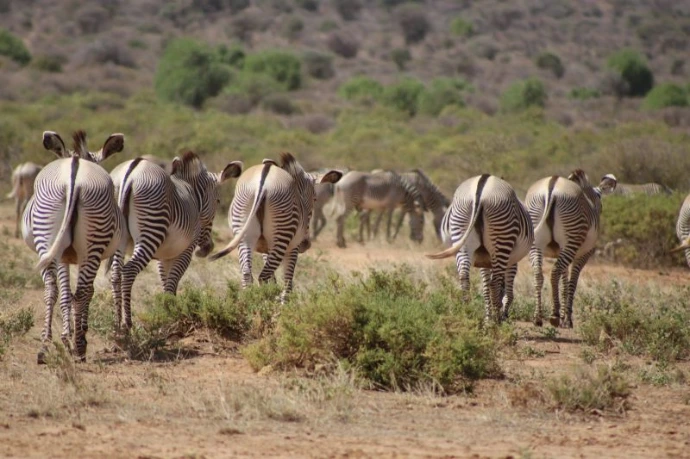
At dawn in the Ndoto–Keno landscape, a small herd of Grevy's zebra moves cautiously toward seasonal grazing grounds. A few kilometers away, a towering Reticulated giraffe stretches for acacia leaves in a thinning woodland. Hidden among the rocky outcrops, the rare Pancake tortoise shelters in the crevices that have protected it for centuries.
These species are not just wildlife.
They are indicators of ecosystem health.
And today, their survival depends on whether people and wildlife can share the same landscape.
The Ndoto–Keno corridor is one of northern Kenya’s last functioning dryland wildlife passages. Without deliberate protection, migratory routes fragment, habitats degrade, and conflict escalates. When that happens, both wildlife and pastoral livelihoods suffer.
NFCO’s Wildlife Conservation & Human–Wildlife Coexistence Programme was created to change that trajectory.
Endangered Species Conservation
Grevy's zebra – Endangered
Reticulated giraffe – Endangered
Pancake tortoise – Critically Endangered
By focusing on these flagship species, we protect entire ecosystems.
Grevy’s zebra and reticulated giraffe are globally endangered. The pancake tortoise is critically endangered. Their numbers are declining across East Africa due to habitat loss, illegal trade, and fragmentation.
In Ndoto, we are taking action before it is too late.
We work with communities to:
Map and legally safeguard wildlife migratory routes
Protect critical grazing, breeding, and rocky habitats
Conduct joint patrols with Kenya Wildlife Service and trained community rangers
Deploy camera traps and GPS monitoring systems for real-time tracking
This is not symbolic conservation. It is data-driven, community-backed protection of globally threatened species.
Human-Wildlife Co-existence
Turning Conflict into Coexistence
For pastoral families, a single wildlife incident can wipe out months of income. When livestock is lost, retaliation follows. When retaliation happens, endangered species decline further.
We break this cycle through:
Community Wildlife Response Teams
Early warning systems for elephant and wildlife movement
Predator-proof livestock enclosures (bomas)
Rapid response coordination aligned with Kenya Wildlife Service
The result is practical and measurable: fewer livestock losses, fewer retaliatory killings, and growing tolerance for wildlife.
Conservation Education and Awareness
Building the Next Generation of Stewards
Sustainable conservation is not achieved in a single project cycle. It is built across generations.
Through:
Community stewardship forums
School-based endangered species education
Integration of traditional ecological knowledge
We are shaping a culture where protecting Grevy’s zebra, giraffes, and tortoises is a shared responsibility and a source of pride.
Making Conservation Pay
Communities protect what they benefit from.
NFCO integrates:
Conservation performance-based payments
Wildlife-linked benefit-sharing mechanisms
Revenue-sharing from eco-tourism and conservation fees
Community conservation agreements tied to corridor protection
When endangered species populations stabilize, communities see tangible returns. Conservation becomes an economic asset—not a burden.